New Ibero-American Network for Local Sustainable Coffee Innovation Established to Advance the Green Transition
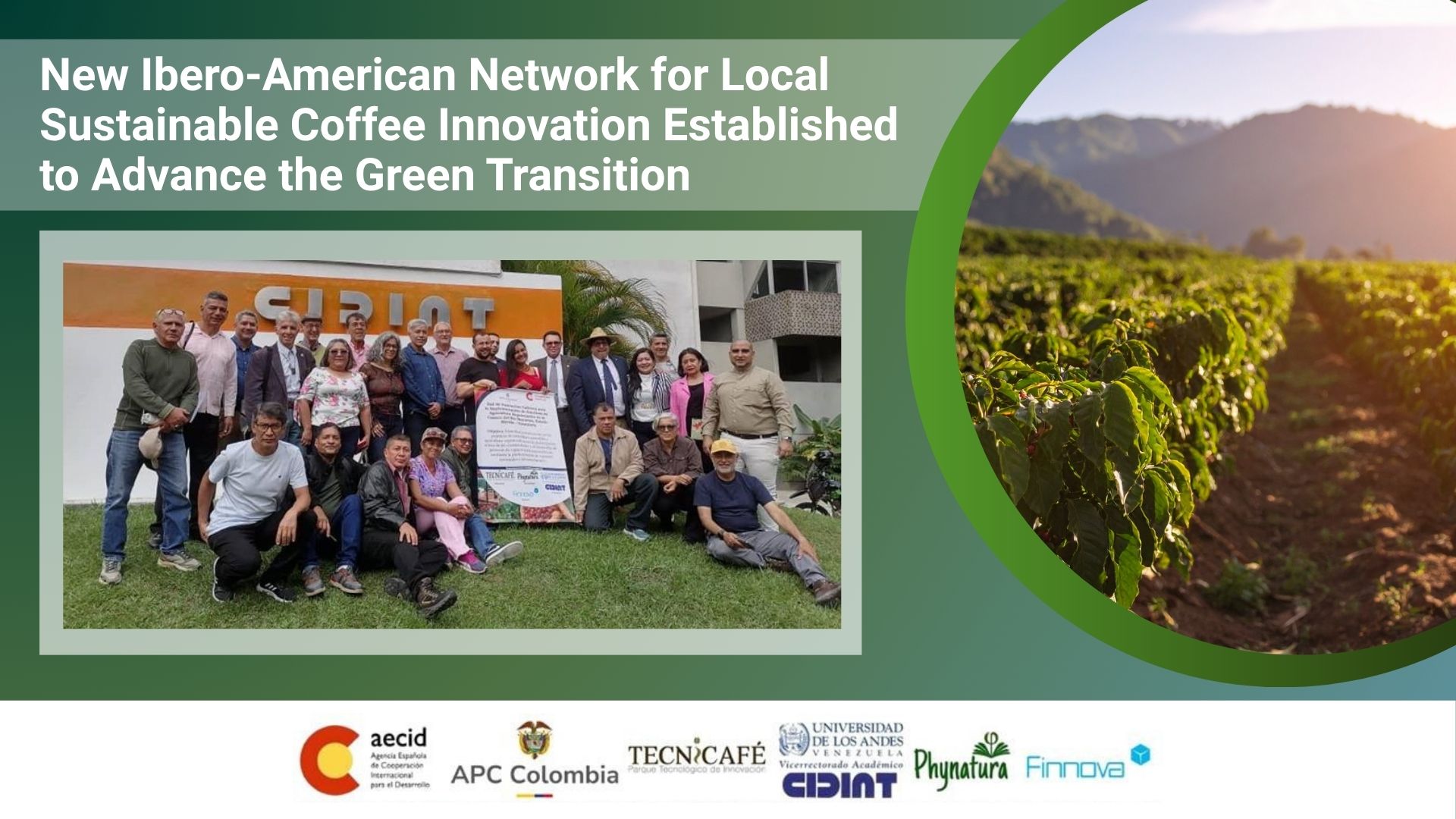
• Coffee associations from Colombia, Ecuador and other countries join this new platform led by the University of the Andes under an AECID-funded project
• The network moves beyond greenwashing and promotes sustainable, organic and ecological agriculture based on legal frameworks and public certification schemes
• The initiative officially joins the Glocal Circular Economy Manifesto, promoted by the Finnova Foundation, the City of Ibagué, the OECD and supported by more than 4,000 cities worldwide
Brussels, 29 May 2026. In an effort to transform and safeguard the future of coffee farming across the region, clusters, producers’ associations, research centres and innovation organisations from countries including Venezuela, Colombia, Ecuador and Spain have officially established the Ibero-American Network for Local Sustainable Coffee Innovation. The initiative was formalised during the Governance Meeting held at the Inter-American Centre for Environmental and Territorial Development and Research (CIDIAT) of the University of the Andes (ULA) in Mérida, Venezuela, as the closing event of the Strategic Seminar on Regenerative Agriculture, which took place from Monday 25 to Thursday 28 May 2026.
The network was created under the framework of the project “Coffee Innovation Network for the Implementation of Regenerative Agriculture Practices in the Mocotíes River Basin, Mérida – Venezuela”, funded by the Spanish Agency for International Development Cooperation (AECID) and coordinated by the University of the Andes. The initiative is also being developed through a triangular cooperation model involving institutions from Venezuela, Colombia and Spain, strengthening links between academia, the public sector and productive stakeholders.
This cooperation has consolidated a strategic alliance between CIDIAT-ULA and PHYNATURA (Venezuela), TECNICAFÉ Innovation Technology Park (Colombia) and the FINNOVA Foundation (Spain), with the aim of promoting innovation, sustainability and climate resilience across Ibero-American coffee-producing regions.
Initially formed by four founding entities, with several new organisations already joining, the network has a clear mandate: to facilitate the exchange of best practices, promote knowledge transfer and working methodologies, foster collaborative projects and democratise access to information on European and international multilateral funding opportunities for coffee producers.
Strategic Alliances as a Driver of Change
To ensure that the green transition is truly fair and inclusive, the Ibero-American Network places strategic partnerships at the heart of its operating model. Its objective is to bring together corporations, public institutions, universities, international cooperation bodies and producers’ organisations to build a support ecosystem capable of turning environmental sustainability into real economic opportunities for coffee-growing communities.
The network will also promote the progressive incorporation of new members from across the Ibero-American region, strengthening participatory governance and generating tangible benefits for the primary sector while ensuring the long-term viability of coffee farms.
Governance and Territorial Leadership
During the founding ceremony, Cluster Café Mérida, the Regional Supply and Market Centre (CRAM) of Santa Cruz de Mora and the La Mucuy Agroecological Farmers’ School were appointed as the organisations responsible for coordinating and monitoring the network.
These entities will lead the implementation of actions aimed at strengthening sustainable and specialty coffee production, covering the entire coffee value chain, from land preparation and seed selection to processing, marketing and the final cup.
Sustainable Agriculture with Credible Certification
The network takes a firm stance in favour of sustainable agriculture, including regenerative, organic and ecological farming practices focused on ecosystem conservation, water resource protection, soil restoration and climate change adaptation.
Its purpose is to provide producers with technical tools, robust legal frameworks and nationally and internationally recognised certification systems, ensuring that farmers’ efforts to protect the environment meet the highest regulatory standards while enhancing the added value of their products in international markets.
Circular Economy and Coffee By-product Valorisation
One of the network’s strategic priorities will be the promotion of circular economy approaches within the coffee sector. To this end, it will support initiatives focused on the valorisation of coffee by-products, waste reduction and resource efficiency throughout the value chain.
The network will also work to connect coffee producers and organisations with international funding opportunities related to sustainability, circular bioeconomy, rural innovation and climate adaptation.
Rural Youth and Sustainable Development
Beyond technical and productive aspects, participating organisations highlighted the importance of strengthening generational renewal in coffee-growing areas and encouraging the active participation of rural youth in innovation and sustainability processes.
The network will promote training, entrepreneurship and innovation initiatives aimed at reducing technological gaps, creating new economic opportunities and strengthening young people’s connection to rural territories, thereby contributing to social well-being and the sustainable development of coffee-growing communities.
Alignment with the SDGs and the Glocal Manifesto
The Ibero-American Network for Local Sustainable Coffee Innovation was created with a strong international commitment. Its statutes are aligned with the United Nations Sustainable Development Goals (SDGs), promoting decent work, water protection, responsible production and climate action.
As a demonstration of this institutional commitment, the new network has officially joined the Glocal Circular Economy Manifesto. This international declaration has been promoted by the Finnova Foundation, the City of Ibagué (Colombia) and the OECD, and is already supported by more than 4,000 cities worldwide.
Through this alliance, network members will gain access to European innovation methodologies, international cooperation mechanisms and funding opportunities to develop sustainable and scalable projects in coffee-producing regions across Ibero-America.
The working sessions brought together more than one hundred in-person and online participants from Venezuela, Colombia, Spain, Costa Rica and Peru. Among the international experts participating were Viviana Narváez and Rafael Bermúdez from TECNICAFÉ, as well as Juan Manuel Revuelta Pérez from the FINNOVA Foundation, who shared experiences and methodologies aimed at strengthening innovation and sustainability within the coffee sector.
About the FINNOVA Foundation
The FINNOVA Foundation is a Spanish-Belgian non-profit organisation based in Brussels, specialising in the promotion and development of innovation and entrepreneurship at both European and international levels.
With a strong network of partners and stakeholders, FINNOVA supports public and private institutions in accessing European funding, strategic communication and consortium building. The foundation operates in key areas such as environmental protection, sustainable development, circular economy and information and communication technologies (ICT).